

Bloodroot: A Feminist Restuarant and Bookstore
“Feminism is not a part-time attitude for us; it is how we live all day, everyday. Our choices in furniture, pictures, the music we play, the books we sell, and the food we cook all reflect and expres

One of the quiet joys of my job is that when I travel, dinner is entirely up to me. Within per diem reason, of course.
Five years ago, on one of those work trips, I did what I often do when I’m alone in a new city: I opened Google Maps and searched “vegetarian restaurants near me.” That’s how I found Bloodroot — described as a feminist bookstore and restaurant with a seasonal vegetarian menu. I didn’t need to read any further. I was in.
When I pulled onto the small cul-de-sac that Bloodroot occupies, the darkness of the Long Island Sound gave way to a string of warm lights tracing the restaurant’s unassuming exterior. It looked both modest and magnetic — like it had been waiting for me to find it.
I don’t remember much else from that first visit, but when I went back this year, I learned that Bloodroot will close its doors for good in December 2025. I don’t know how often you find yourself in Bridgeport, Connecticut, but if you do — go. Truly, there’s nothing like it.
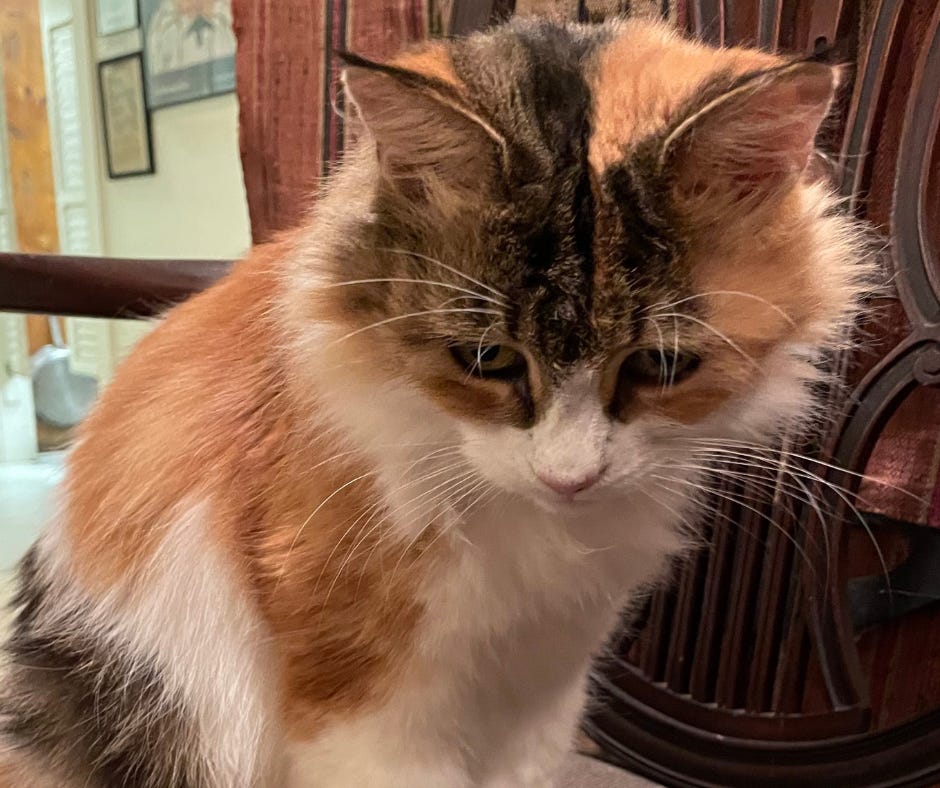
Oh, and the owners have a cat named Gloria Steinem. There are other cats around, but Gloria is the undisputed queen of the place. An affectionate, chin-scratch-loving matriarch who presides over the dining room.
For nearly fifty years, Bloodroot has embodied the heart of a movement that flourished through the 1970s and 80s, when more than 230 feminist cafés and restaurants dotted the U.S. and Canada. Founders Selma Miriam and Noel Furie left their husbands, purchased property, and created Bloodroot as a space of resistance — a challenge to the patriarchal grip on food, literature, and power itself.
They captured that spirit in their first cookbook with The Bloodroot Collective, The Political Palate, writing:
“Feminism is not a part-time attitude for us; it is how we live all day, every day. Our choices in furniture, pictures, the music we play, the books we sell, and the food we cook all reflect and express our feminism.”
If you’ve never thought of food as political, Bloodroot will change that.
What Makes Dining at Bloodroot Different?
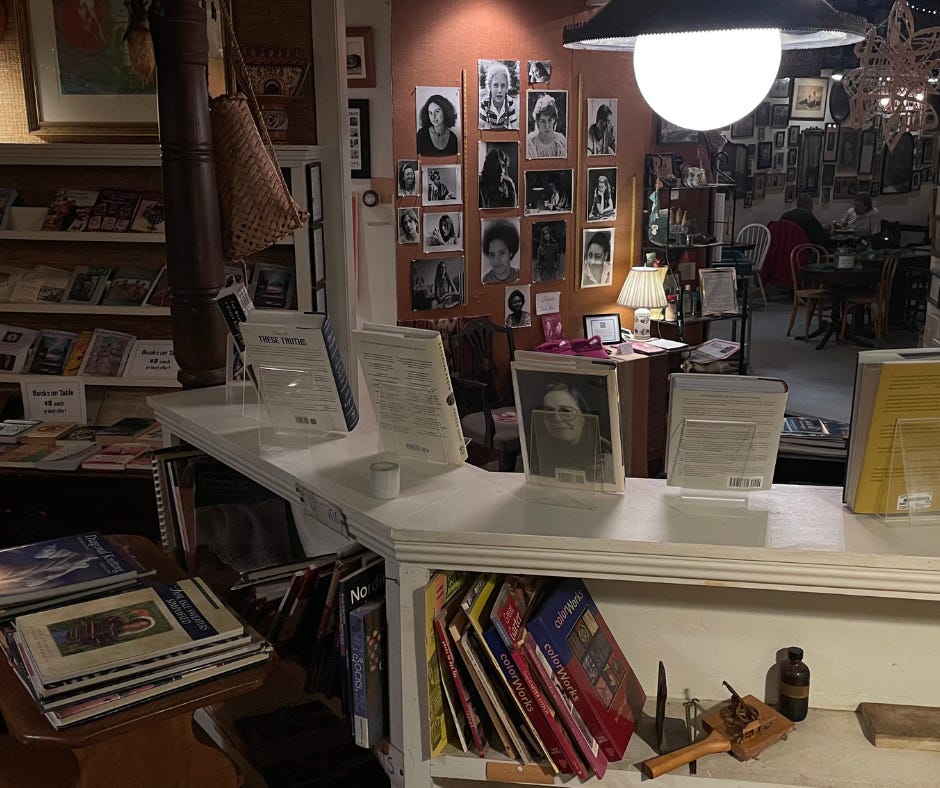
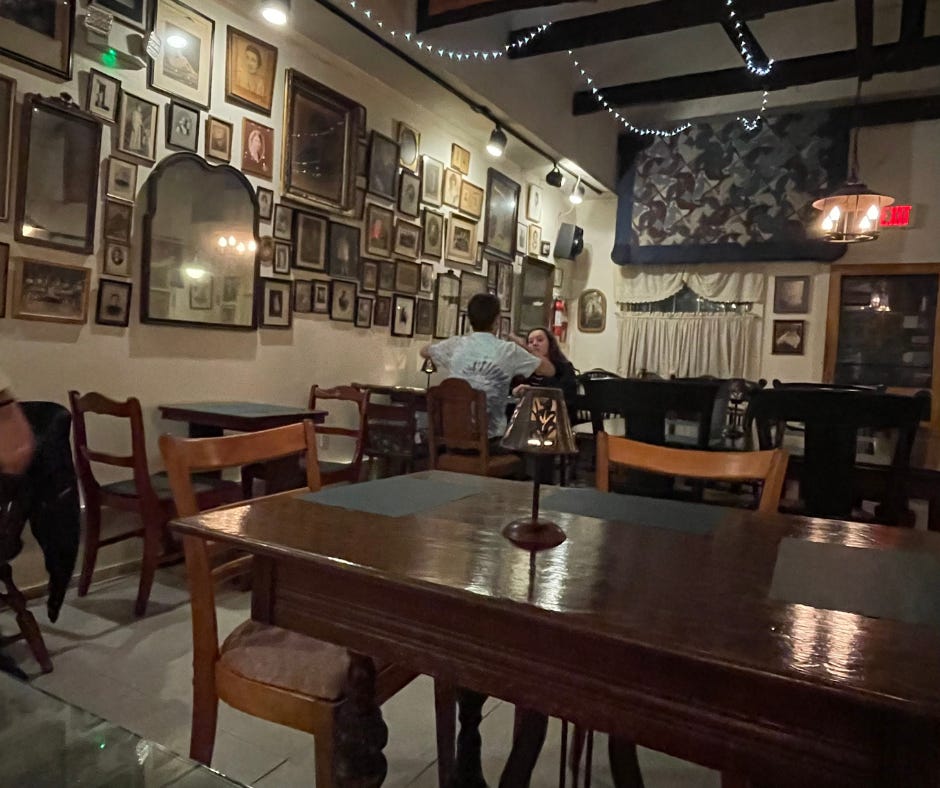
When you walk in, you’re greeted by Noel (and often Gloria). Noel asks how you’re doing, if you’ve been to Bloodroot before, and invites you to read the chalkboard menu hanging over an open window into the kitchen. Behind it, a team of women work calmly and confidently, preparing food that feels both nourishing and defiant.
You place your order, then you can settle in with a book from the shelves or browse the small feminist bookstore tucked beside the dining area. When your name is called, you pick up your meal. When you’re done, you bus your own dishes.
It might sound simple, even quaint, but that’s the point. At Bloodroot, you’re not a customer to be served. You’re a participant in something shared. The women cook the food; we care for the space together. Bloodroot was built on a movement, and all who enter the door agree to participate.
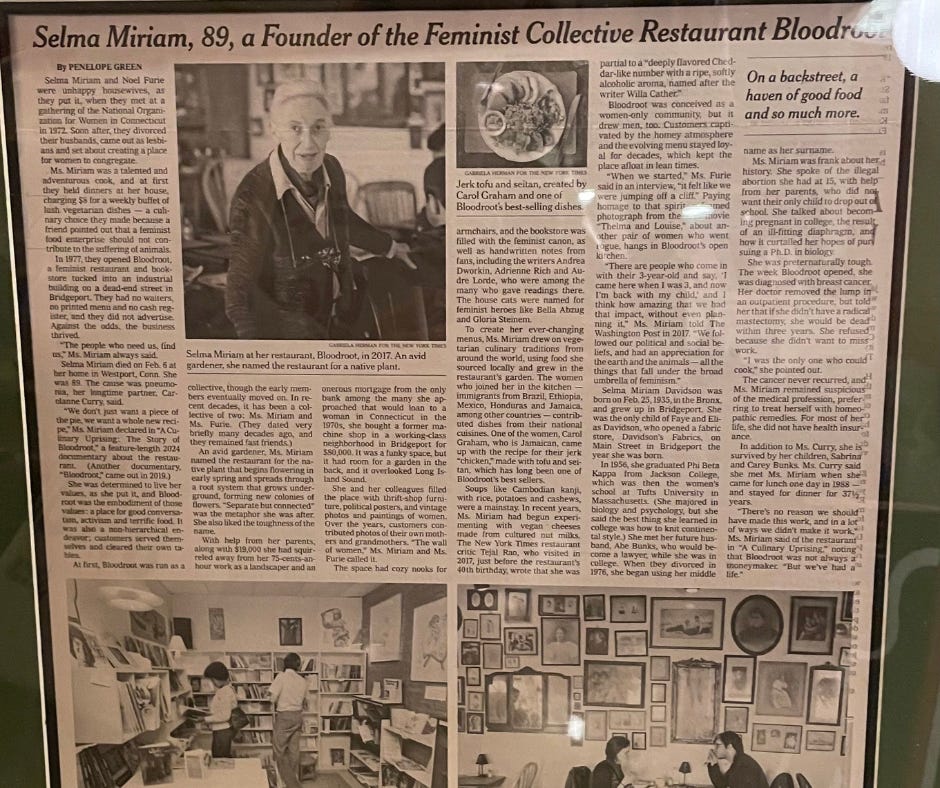
Selma passed away in May 2025, but her spirit fills the room. Noel still works the register and often sits down with guests as they eat. When I visited, we talked about her legacy, my work at a women’s college, how proud she is of her children, and how strange it feels to think about retiring — especially when you’ve never had free time before.
The Food
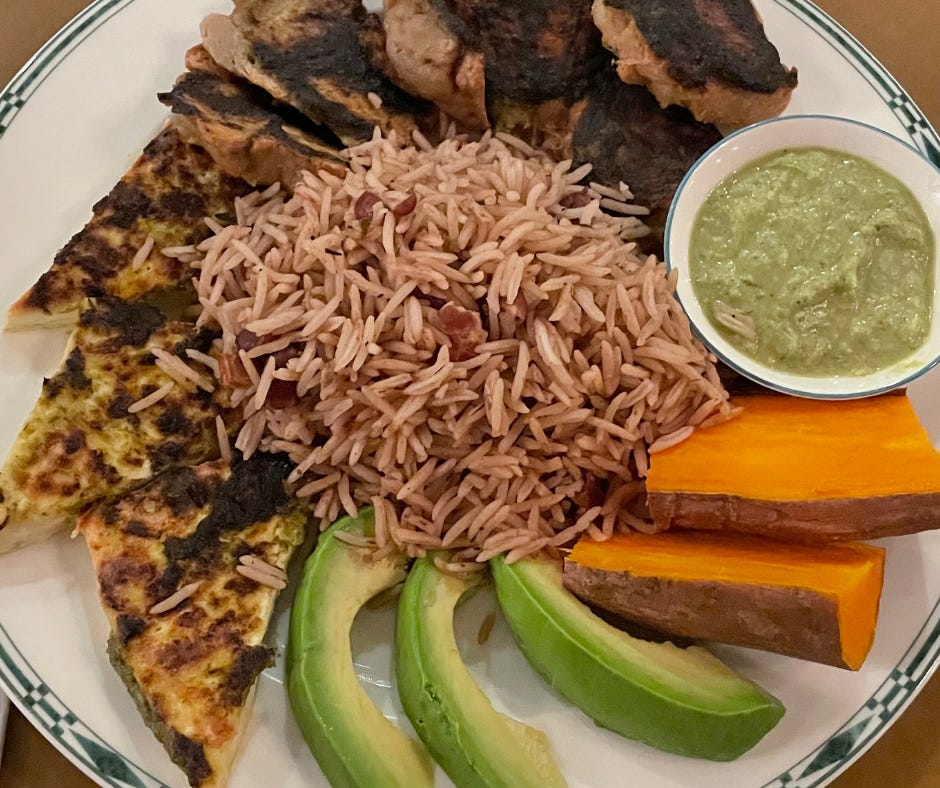
Every time I go, I order the same thing: the Jamaican jerk “chicken” (tofu and seitan) with coconut rice, sweet potato, and avocado. It’s perfect.
I’ve never been a big fan of seitan (one bad attempt at BBQ seitan in high school and I was off the stuff for good), but somehow, here, it’s transformed — crisp at the edges, deeply seasoned, just the right amount of char. The plating is simple, but the food feels like something a friend made for you — with care, intention, and a quiet pride.
A Legacy in Full
To honor Bloodroot’s enduring influence, filmmaker Annie Laurie Medonis directed and produced the first documentary chronicling its story. The film has been out for some time, but its meaning feels sharper now as the restaurant nears its final chapter.
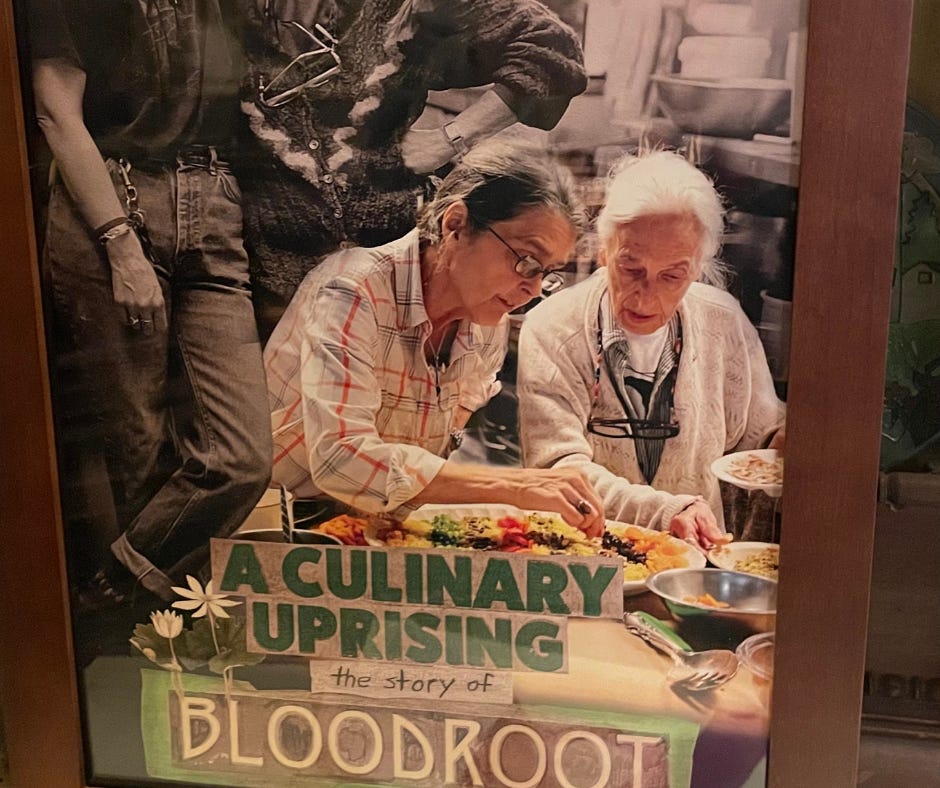
Bloodroot is more than a place to eat. It’s a space of memory, politics, and possibility. It’s food as a form of feminism.
If “when you’re here, you’re family” weren’t already taken, I might borrow it for Bloodroot — though it wouldn’t capture the full truth. Bloodroot isn’t about belonging because someone invites you in. It’s about realizing you were part of it all along.
So if you ever find yourself at the end of a quiet cul-de-sac in Bridgeport before the year’s end, go.
Order the jerk tofu. Pet Gloria Steinem. Sit for a while.
There truly is nothing else like it.
Wow! I remember that seitan experience. Didn't we order a pizza afterwards?
Good to know this place has existed for so long, but sad that it will be closing.